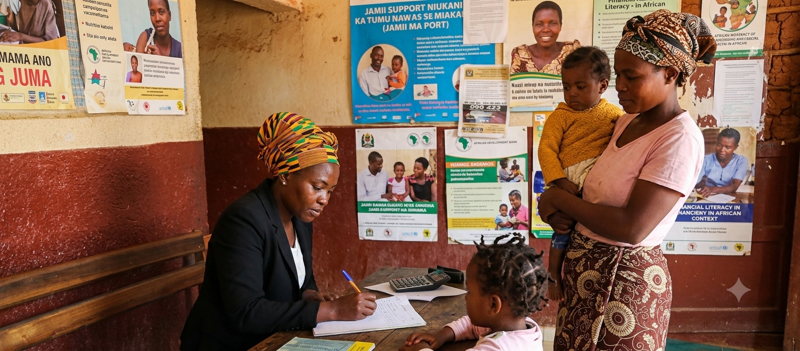
Understanding the Thematic Area:This thematic area is governed by the understanding of vulnerability as consisting of two aspects: exposure to risk and the resilience or capacity of households and communities to cope with shocks. Vulnerability can be examined across multiple contexts and situations. RuralNet Associates Limited has adopted the concept of well-being as a controlling feature in its analytical framework. From this perspective, vulnerability is viewed as the risk that an individual, household, or community will fail to achieve well-being outcomes when exposed to adverse events. This can be further disaggregated to analyze vulnerability across life-cycle changes and intergenerational factors.
Such an analysis enables the design of holistic social protection systems. It ensures that individual instruments complement one another to progressively achieve universal coverage, deliver predictable and cumulative benefits, promote pro-poor growth, and reduce social exclusion. In this context, social protection is understood as a set of interventions designed to meet immediate needs and relieve the manifestations of poverty and suffering. Furthermore, it invests in the long-term coping capacity of households and addresses the power imbalances in societies that create and sustain vulnerabilities.
Coverage: This understanding leads to a threefold approach to the analysis of vulnerability: (i) An examination of the nature of risks to which the vulnerable are exposed; (ii) Analysis of the transmission mechanisms of the adverse effects of shocks; and (iii) The coping mechanisms available to the vulnerable. All these take place within an integrated analytical framework of how households and communities build their wellbeing by looking at three dimensions – outcomes (resources a person can command, what they can achieve with the resources and the meaning they give the goals they achieve and how they think of what they have), structures (the social and economic context in which wellbeing takes place) and processes (time and the processes that generate wellbeing outcomes).
Qualifications of Consultants: Consultants in this thematic area possess adequate experience in poverty and vulnerability analysis and have strong exposure to the design and implementation of various social protection schemes. Because the thematic area is diverse, it is populated by a multi-disciplinary team of experts from the social sciences and other disciplines.